Wardrobe Design Malaysia: Custom Storage Solutions for Every Room
23/05/2026
Home Renovation Guide Malaysia 2026: From Planning to Handover
23/05/2026Cabinet Materials Malaysia: Complete Guide to Plywood, MDF, Melamine & More
Walk into any Malaysian cabinet shop and you’ll hear terms like “BWP plywood,” “MDF,” “melamine,” and “HDF. For more details, read our custom cabinet selection guide.” What do they actually mean for your kitchen? Choosing the wrong material means your cabinets will swell, delaminate, or grow mold within 2-3 years in Malaysia’s tropical humidity. For more details, read our custom kitchen cabinet materials overview. This guide explains every cabinet material available in Malaysia, with honest comparisons based on real-world performance.
The Malaysian Climate Reality Check
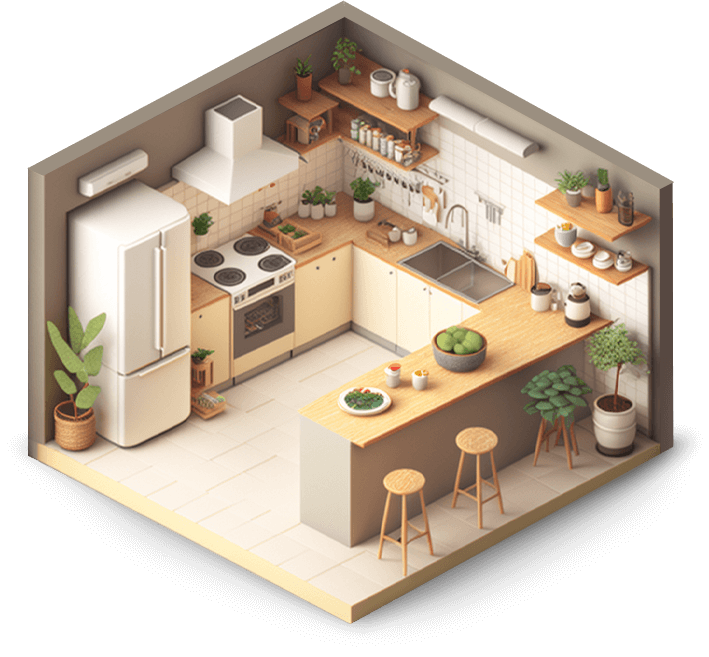
Before choosing materials, understand what your cabinets will face: Malaysian relative humidity averages 75-85% year-round, with temperatures between 28-35°C. During the monsoon season (November-February), humidity spikes to 90%+. Your cabinets are essentially in a permanent steam room.
This is why material choice matters more in Malaysia than in temperate countries. A particle board cabinet that lasts 10 years in Germany will fail in 3-5 years in Malaysia without air conditioning. Choose wisely.
Core Cabinet Materials: The Complete Comparison
BWP Plywood — The Gold Standard for Malaysian Kitchens
BWP = Boiling Water Proof. This is not marketing—it’s a technical certification. BWP plywood is tested by boiling in water for 72 hours with no delamination of the adhesive layers. This is the only material certification that matters for Malaysian cabinetry.
At EverGreen Custom Cabinets, BWP plywood is our standard material for all cabinet bodies. We do not use MDF or particle board for kitchen cabinets—ever. (Reference: NKBA Kitchen Planning Guidelines)
- Structure: Multiple layers of wood veneer glued together with phenolic resin glue. Cross-grain construction provides strength in both directions
- Moisture resistance: ⭐⭐⭐⭐⭐ (Boiling water proof—highest certification)
- Screw holding: Excellent. Screws hold firmly without stripping, critical for Blum hinge installation
- Workability: Can be routed, drilled, and shaped. CNC machining produces clean, precise edges
- E0 grade available: Formaldehyde ≤0.5mg/L (vs Malaysian standard E1 ≤1.5mg/L)
- Lifespan in Malaysian kitchen: 15-20 years with normal use
- Price: RM 80-180 per sheet (18mm BWP plywood, 4×8 ft sheet)
MR Plywood (Moisture Resistant)
MR plywood is the lower-grade cousin of BWP. It resists moisture better than MDF but does not meet BWP’s 72-hour boiling test. Acceptable for TV consoles, shoe cabinets, or wardrobes in air-conditioned rooms. Not acceptable for kitchen cabinets in Malaysia.
- Moisture resistance: ⭐⭐⭐ (Moderate—suitable for dry areas only)
- Lifespan in Malaysian kitchen: 5-8 years
MDF (Medium Density Fiberboard)
MDF is made from compressed wood fibers bonded with resin. It’s smooth, consistent, and easy to paint or laminate. But it’s highly susceptible to moisture. In a Malaysian kitchen, MDF absorbs humidity through the edges and swells irreversibly.
- Moisture resistance: ⭐⭐ (Poor—edges swell within 6-12 months in kitchen)
- Screw holding: Poor to fair. Screws strip easily, hinge screws loosen over time
- Best use in Malaysia: Painted panels in fully air-conditioned rooms only
- Lifespan in Malaysian kitchen: 2-4 years (will definitely fail)
- Price: RM 30-60 per sheet (18mm MDF, 4×8 ft sheet)
Particle Board / Chipboard
Made from compressed wood chips and resin. The cheapest option and the worst performer in humid conditions. Found in most ready-made IKEA-style cabinets. The resin bonding breaks down when exposed to humidity, causing the boards to crumble. Never use particle board in Malaysian kitchens.
- Moisture resistance: ⭐ (Very poor—fails within 1-3 years in Malaysia)
- Cost: RM 20-40 per sheet (18mm particle board, 4×8 ft sheet)
Door Finish Materials: Acrylic, PET, PVC, Melamine & Lacquer
Acrylic Doors
High-gloss acrylic sheet applied over a substrate (usually MDF or plywood). Produces a mirror-like “piano finish” that reflects light, making small Malaysian kitchens feel larger. Highly popular in 2024-2026 interior trends.
- Finish: High-gloss, available in solid colors and wood grains
- Moisture resistance: ⭐⭐⭐⭐⭐
- Scratch resistance: ⭐⭐⭐ (Moderate—can be polished but not repaired)
- Cleanability: ⭐⭐⭐⭐⭐ (Wipes clean, non-porous)
- Best for: Modern, minimalist kitchens, small condos (reflects light)
- Price premium: +15-25% vs PVC
PET (Polyethylene Terephthalate) Doors
PET is a matte-finish film applied over a substrate. The 2025-2026 trending choice for Malaysian homeowners who want a premium look without the high-gloss “showroom” aesthetic. Fingerprint-resistant due to matte texture.
- Finish: Soft-touch matte, available in solid colors and wood grains
- Moisture resistance: ⭐⭐⭐⭐⭐
- Scratch resistance: ⭐⭐⭐⭐ (Better than acrylic)
- Best for: Modern homes, families with young children, fingerprint-prone areas
- Price premium: +10-20% vs PVC
PVC Membrane / foil Doors
PVC film applied via vacuum membrane press. Can simulate wood grain, stone textures, or solid colors. The most versatile finish option. Durable and widely used in Malaysian cabinet shops.
- Finish: Available in wood grain, stone, and solid colors
- Moisture resistance: ⭐⭐⭐⭐
- Durability: Good for 10-15 years with normal use
- Best for: Budget-conscious homeowners wanting wood aesthetics
- Price: Standard option, good value
Melamine-Faced Board
Paper-impregnated melamine resin fused onto a substrate (MDF or particle board). The most budget-friendly option. Available in a wide range of colors and patterns. Edge banding is visible and can peel over time in humid conditions.
- Finish: Matte, limited textures
- Moisture resistance: ⭐⭐⭐ (Acceptable for dry areas only)
- Durability: 5-10 years with fair use
- Best for: Rental properties, budget projects
Lacquer Doors
Multiple coats of lacquer paint applied and polished to a high gloss. Highest-end aesthetic. Requires skilled craftsmanship and is the most expensive finish option.
- Finish: Ultra high-gloss, seamless edge
- Scratch resistance: ⭐⭐⭐⭐⭐
- Moisture resistance: ⭐⭐⭐ (Requires care in humid areas)
- Best for: Luxury kitchens with climate control
- Price: +30-50% vs PVC
Countertop Materials: Quartz vs Granite vs Solid Surface
Quartz (EverGreen Standard)
Engineered stone made from 90-93% crushed quartz aggregate bonded with polyester resin. The best all-around countertop for Malaysian kitchens.
- Heat resistance: 300°C (can place hot pans directly)
- Stain resistance: Non-porous, does not absorb oil, coffee, or wine
- Scratch resistance: Mohs hardness 7 (comparable to granite)
- Maintenance: Wipe with soap and water. No sealing required
- Lifespan: 20+ years with minimal maintenance
- Thickness: 12mm (EverGreen standard)
- Price range: RM 80-200 per sqft installed
Granite (Natural Stone)
quarried natural stone with unique veining patterns. Beautiful but requires maintenance.
- Porosity: High—requires sealing every 6-12 months or staining occurs
- Maintenance: Reseal every 6 months, clean spills immediately
- Unique look: Each slab is unique—cannot be replicated
- Price range: RM 60-180 per sqft installed
Laminate Countertop
Formica-style laminate over a substrate. Budget option, not recommended for heavy-use kitchens.
- Heat resistance: ⭐⭐ (Melts with hot pans)
- Water resistance: ⭐⭐⭐ (Seams can delaminate)
- Best for: Pantry counters, utility areas
Hardware: The Hidden Cost of Cheap Hinges
Cabinet hinges and drawer slides are the most stressed components. In Malaysia, cheap hinges rust within 2-3 years due to humidity. EverGreen uses Blum (Austria) exclusively:
- Blum Blumotion hinges: Soft-close, 20° opening angle, rated for 100,000+ cycles
- Blum Tandem drawer slides: Full extension, soft-close, rated for 50kg load
- Blum AVENTOS lift systems: For overhead cabinet doors (up-lift mechanism)
Material Price Comparison 2026 (per 4×8 ft sheet, 18mm)
| Material | Price (RM) | Kitchen Suitable? | Lifespan |
|---|---|---|---|
| BWP Plywood | 80-180 | ✅ Yes (Standard) | 15-20 years |
| MR Plywood | 50-90 | ⚠️ Dry areas only | 5-8 years |
| MDF | 30-60 | ❌ No (kitchen) | 2-4 years |
| Particle Board | 20-40 | ❌ No | 1-3 years |
Common Questions About Custom Cabinetry in Malaysia
Over the years, we have answered thousands of questions from Malaysian homeowners about custom cabinetry. Here are the answers to some of the most frequently asked questions that do not fit neatly into a standard FAQ format.
How do I know if I am getting a fair price?
The best way to evaluate pricing is to obtain at least three detailed quotations for the same scope of work. Look beyond the bottom-line figure — compare the materials specified, the hardware brands included, the warranty terms, and the level of detail in the quotation. A lower price that uses inferior materials or excludes essential items is not a bargain. EverGreen’s quotations include a full breakdown of every component so you know exactly what you are paying for. We encourage you to compare our quotation with others — we are confident in the value we offer.
Should I renovate my kitchen before selling my home?
A kitchen renovation can significantly increase your property’s appeal to potential buyers, but whether it is worth the investment depends on several factors. If your current kitchen is severely dated or damaged, a mid-range renovation (RM 15,000-25,000) can yield a strong return on investment by making the home more marketable. However, if you are selling within 6 months, a full high-end renovation may not recoup its cost. Focus on cosmetic updates (new countertops, fresh paint, modern hardware) rather than structural changes if your primary goal is resale value. Consult with a real estate agent familiar with your area for specific advice on what buyers in your neighbourhood value most.
What is the difference between custom cabinets and ready-made cabinets?
Ready-made (stock) cabinets are pre-manufactured in standard sizes and finishes — you choose from what is available. Custom cabinets are built to your exact specifications: dimensions, materials, colours, configurations, and features are all tailored to your space and needs. Ready-made cabinets are less expensive upfront (typically 30-50% cheaper) and available immediately, but they rarely fit perfectly, leaving awkward gaps and wasted space. Custom cabinets cost more but utilise every centimetre of your space, last longer due to superior materials and construction, and can be designed precisely for your lifestyle. For most Malaysian homeowners planning to stay in their home for 5+ years, custom cabinets offer better long-term value.
How do I maintain my cabinets in Malaysia’s humid climate?
Regular maintenance is the key to cabinet longevity in our tropical climate. Keep your kitchen and bathroom well-ventilated — use exhaust fans during and after cooking or showering. Wipe up spills immediately, especially on cabinet interiors and edges where moisture can penetrate. Avoid hanging wet cloths or towels on cabinet doors. Check silicone seals around sinks and countertops every 6 months and replace any that show signs of mould or cracking. For solid wood elements, maintain consistent indoor humidity levels (air conditioning helps). With proper care, quality custom cabinets should last 15-20 years or more in Malaysian conditions.
Frequently Asked Questions
Why does EverGreen only use BWP plywood?
Because we’ve done the math over 8 years of after-sales service. Cabinets using MDF or particle board in Malaysian kitchens show visible moisture damage within 12-18 months. BWP plywood cabinets from EverGreen have a <1% failure rate after 8 years. It's not about brand—it's about physics.
Can I get a combination—MDF doors with plywood body?
Technically yes, but we don’t recommend it. The MDF doors will still absorb humidity from cooking steam and door edges. If budget is tight, use PET-finished BWP plywood doors instead—same modern look, better durability.
What’s the difference between 18mm and 12mm cabinet body?
18mm BWP plywood is the standard for cabinet carcases (bodies). 12mm is acceptable for internal shelving and drawer bases only. Never use 12mm for cabinet sides or backs—it lacks structural rigidity.
Need a custom cabinet designed with the right materials? Contact EverGreen for a free consultation. We’ll explain material options for your specific kitchen environment and budget. According to MGBC (Malaysia Green Building Council), this aligns with industry standards.

Ready to Transform Your Space?
Contact EverGreen Custom Cabinets today for a free consultation and quotation. Our team will help you design the perfect custom solution for your Malaysian home.
📱 Chat with us on WhatsApp | ✉️ enquiry@evergreencustomcabinets.com.my
Bahasa Malaysia version of our cabinet materials guide.
Cabinet Material Durability in Malaysian Climate
Malaysia's tropical climate — with average humidity levels of 70-90% and temperatures of 25-35°C — places unique demands on cabinet materials. Understanding how different materials perform in these conditions will help you make a choice that lasts. kitchen cabinet projects in Kuala Lumpur.
Moisture Resistance Ratings
Cabinet materials have different moisture resistance capabilities. Standard MFC (Melamine Faced Chipboard) has limited moisture resistance and is best suited for bedrooms and living areas — not recommended for kitchen base cabinets where water exposure is frequent. Moisture-Resistant MFC (often green-coloured core) contains water-repellent additives, making it suitable for kitchen cabinets and bathroom vanities. Plywood offers excellent inherent moisture resistance due to its cross-laminated construction — it is the recommended material for kitchen cabinet carcasses in Malaysian homes. Marine Plywood, the highest grade, uses waterproof adhesive and is suitable for outdoor kitchens and extreme humidity environments.
Heat and UV Resistance
Materials exposed to direct sunlight or heat sources need special consideration. Laminate surfaces can fade over time with prolonged UV exposure — choose UV-resistant laminates for cabinets near windows. Melamine surfaces are generally more resistant to fading than laminates. Solid wood expands and contracts with temperature and humidity changes — allow for this movement in the design with appropriate gaps and fixings. For cabinets near cooktops or ovens, ensure adequate heat shielding and use heat-resistant materials for adjacent panels.
Sustainable and Eco-Friendly Cabinet Materials
Environmental consciousness is increasingly influencing material choices in Malaysian home renovation. For more details, read our eco-friendly material certifications. Here are sustainable options available in the local market.
E0 and E1 Grade Boards
The formaldehyde emission rating of board materials directly impacts indoor air quality. E0 grade (≤0.5mg/L formaldehyde emission) is the strictest standard, recommended for homes with children, elderly residents, or anyone with respiratory sensitivities. E1 grade (≤1.5mg/L) meets European safety standards and is suitable for general residential use. E2 grade should be avoided for indoor cabinetry. EverGreen uses E1 grade as standard and offers E0 grade as an upgrade option for health-conscious homeowners.
FSC-Certified Timber
Forest Stewardship Council (FSC) certification ensures that timber products come from responsibly managed forests. Choosing FSC-certified plywood or solid wood supports sustainable forestry practices. While FSC-certified materials may carry a small premium (5-10%), they provide assurance that your home renovation has not contributed to deforestation. Ask your cabinet maker about the source of their timber materials before committing to a purchase.
Recycled and Low-VOC Finishes
Low-VOC (Volatile Organic Compound) paints and finishes emit fewer harmful chemicals during and after application, contributing to better indoor air quality. Water-based finishes are generally lower in VOCs than solvent-based alternatives. Some manufacturers now offer recycled-content board materials — these use post-consumer or post-industrial wood waste, reducing demand for virgin timber. While availability in Malaysia is still limited, the range of eco-friendly options continues to grow.