E0 vs E1 vs E2 Board Guide Malaysia: Which Is Best for Your Home?
07/05/2026
Open Concept Kitchen Design Malaysia: Complete Guide & Ideas
08/05/2026Kitchen Cabinet Materials Guide Malaysia: Plywood vs MDF vs Particle Board
Key Takeaways
- Plywood is the most durable and water-resistant cabinet material, ideal for Malaysia’s humid climate
- MDF offers a smooth surface for painted finishes at a mid-range price point
- Particle board is the most budget-friendly option but performs poorly in moisture-prone areas
- E0-grade boards (low formaldehyde) are increasingly important for health-conscious Malaysian homeowners
- Your choice should balance budget, humidity resistance, and desired finish quality
Table of Contents
Why Cabinet Material Matters in Malaysia
Choosing the right kitchen cabinet material is one of the most important decisions you’ll make during your kitchen renovation. In Malaysia’s tropical climate, with high humidity year-round and temperatures averaging 27-32°C, not all cabinet materials perform equally well. The wrong choice can lead to swollen boards, peeling laminates, and cabinets that need replacing within just a few years.
For Malaysian homeowners, the three most common kitchen cabinet materials in Malaysia are plywood, MDF (Medium Density Fibreboard), and particle board. Each has distinct advantages, drawbacks, and price points that make them suitable for different budgets and usage patterns. Whether you’re renovating a condominium kitchen in KL, a landed property in PJ, or a new home in Johor, understanding these materials will help you make a confident decision.
This guide compares plywood vs MDF vs particle board across durability, moisture resistance, cost, and finish options so you can select the best kitchen cabinet materials in Malaysia for your home.
Plywood: The Premium Choice for Malaysian Kitchens
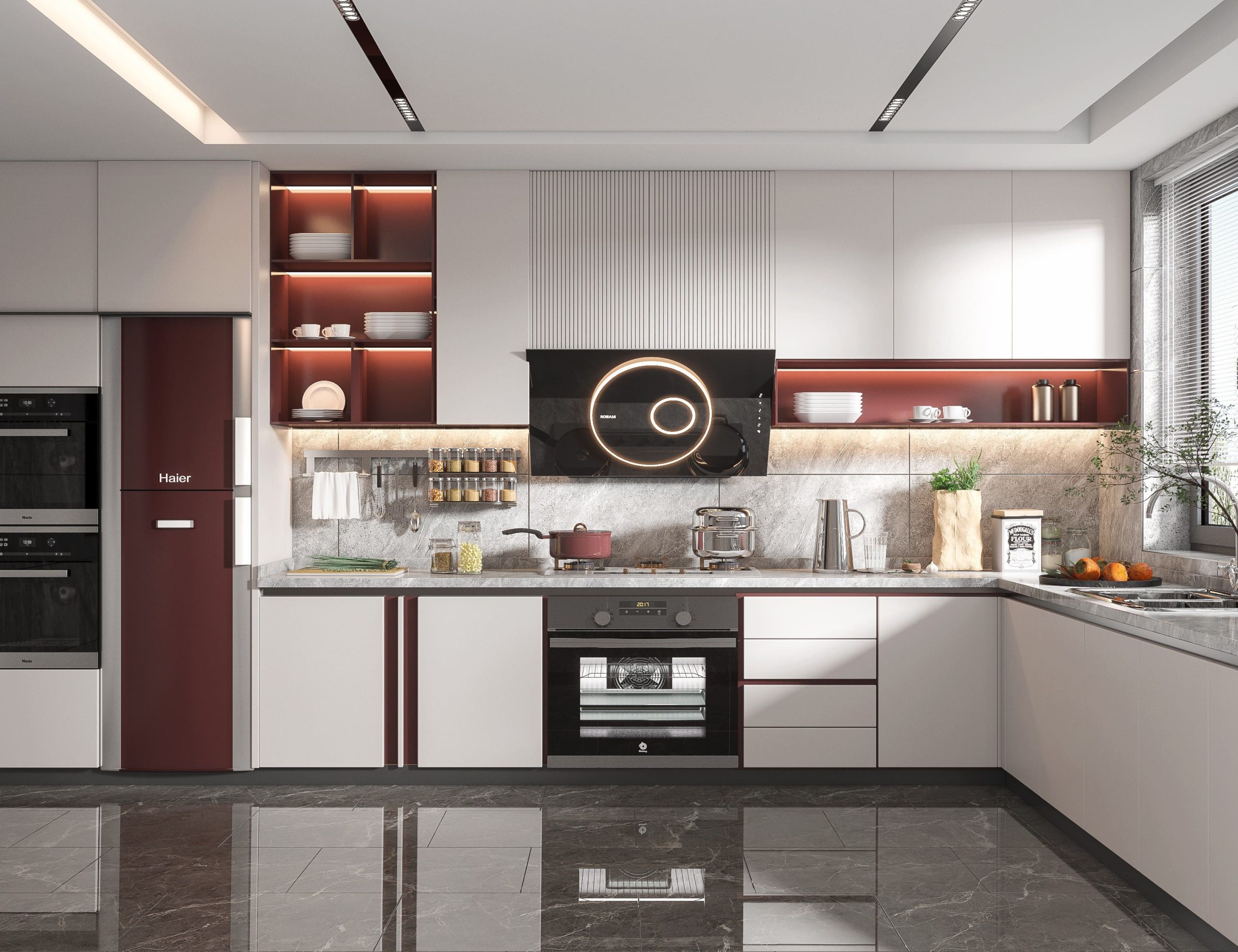
Plywood is widely regarded as the best kitchen cabinet material for Malaysia’s humid climate. It is made by layering thin sheets of wood veneer (plies) crosswise and bonding them with adhesive under heat and pressure. This cross-grain construction gives plywood exceptional strength and dimensional stability.
Advantages of Plywood
- Excellent moisture resistance: The cross-laminated structure resists swelling and warping better than any other engineered wood product
- Superior screw-holding capacity: Cabinet hinges and drawer slides stay firmly attached over decades of use
- Strong and durable: Can support heavy stone countertops without flexing
- Refinishable: Can be sanded and refinished multiple times
- Eco-friendly options: Many Malaysian suppliers now offer E0-grade plywood with minimal formaldehyde emissions
Disadvantages of Plywood
- Higher cost: Premium plywood can cost 30-50% more than MDF or particle board
- Variable quality: Not all plywood is equal — cheaper grades may have voids and inconsistent layers
- Limited finish options: Requires veneer or paint for a finished look; raw plywood isn’t suitable for visible surfaces
For Malaysian homeowners planning a long-term kitchen investment, plywood is the most reliable choice. Custom cabinet makers like EverGreen use high-grade plywood with E0-rated adhesive for projects that need to last 15-20 years or more.
MDF: The Smooth-Finish Performer
Medium Density Fibreboard (MDF) is made from wood fibres bonded with wax and resin under heat and pressure. It has a consistent, smooth surface that takes paint exceptionally well, making it a favourite for modern kitchen designs.
Advantages of MDF
- Perfect paint surface: No grain means flawlessly smooth painted finishes — ideal for modern and minimalist kitchens
- Uniform density: No knots, voids, or inconsistencies that can appear in natural wood products
- Cost-effective: Mid-range price point makes it accessible for most renovation budgets
- Easy to machine: Can be routed into detailed profiles and shapes for decorative cabinet doors
Disadvantages of MDF
- Moisture sensitivity: MDF swells and degrades quickly when exposed to water — a significant concern in kitchen environments
- Heavy: Dense boards make cabinets heavier, requiring stronger hinges and mounting hardware
- Screw-holding: Weaker than plywood; repeated removal and reinsertion of screws can strip the material
MDF works well for upper cabinets and dry areas of the kitchen. Many Malaysian homeowners choose MDF cabinet doors with plywood carcases — combining the smooth finish of MDF with the structural reliability of plywood for the box structure. Kronospan supplies high-quality moisture-resistant MDF suitable for kitchen applications.
Particle Board: The Budget-Friendly Entry
Particle board (also called chipboard) is made from wood chips, sawdust, and resin compressed into boards. It is the most economical cabinet material available in Malaysia.
Advantages of Particle Board
- Lowest cost: Typically 20-40% cheaper than plywood — suitable for rental properties or temporary kitchens
- Consistent surface: Modern particle boards with melamine laminate offer smooth, easy-to-clean surfaces
- Lightweight: Easier to handle and install than heavier materials
Disadvantages of Particle Board
- Poor moisture resistance: Swells rapidly when wet — even a small leak can cause permanent damage
- Weak screw retention: Screws easily strip out, especially with frequent door adjustments
- Low structural strength: Cannot support heavy stone countertops without additional support
- Non-refinishable: Once damaged, particle board cannot be sanded or repaired effectively
Particle board is best suited for dry storage areas, wardrobes, and budget-conscious projects where longevity is not the primary concern. Avoid using it for base cabinets near sinks, dishwashers, or any area exposed to moisture.
Plywood vs MDF vs Particle Board: Complete Comparison
| Feature | Plywood | MDF | Particle Board |
|---|---|---|---|
| Durability | ⭐⭐⭐⭐⭐ | ⭐⭐⭐ | ⭐⭐ |
| Moisture Resistance | ⭐⭐⭐⭐ | ⭐⭐ | ⭐ |
| Surface Finish | ⭐⭐⭐ | ⭐⭐⭐⭐⭐ | ⭐⭐⭐ |
| Screw Holding | ⭐⭐⭐⭐⭐ | ⭐⭐⭐ | ⭐⭐ |
| Weight | Medium | Heavy | Light |
| Cost (per sq ft) | RM 25-50 | RM 15-30 | RM 10-20 |
| Lifespan | 15-20 years | 8-12 years | 5-8 years |
| Best For | Long-term homes | Painted doors, uppers | Budget projects, rentals |
How to Choose the Right Cabinet Material
When selecting kitchen cabinet materials in Malaysia, consider these factors:
- Budget allocation: Spend more on base cabinets (which take the most abuse) and consider MDF for upper cabinets
- Humidity exposure: Near-sink areas, dishwashers, and windows should use plywood or moisture-resistant materials
- Door style: Shaker-style and flat-panel doors work with all materials; detailed routed designs suit MDF
- Formaldehyde standards: Choose E0 or E1 grade boards for healthier indoor air — especially important in smaller Malaysian condos and apartments
- Warranty: Reputable custom cabinet makers offer 5-10 year warranties on materials and workmanship
For most Malaysian homes, a hybrid approach works best: plywood carcase with MDF doors for painted finishes, or all-plywood construction for natural veneer or laminate finishes. This balances cost, durability, and aesthetics effectively.
Learn more about E0 board standards in Malaysia to understand formaldehyde ratings, or explore kitchen cabinet door styles to match your material choice with the right design. For budgeting guidance, read our kitchen renovation budget guide.
Frequently Asked Questions
Which kitchen cabinet material is best for Malaysia’s humid climate?
Plywood is the best choice for Malaysia’s tropical climate. Its cross-laminated construction resists swelling and warping caused by humidity. For areas near water sources like sinks, use marine-grade plywood for maximum protection.
Is MDF suitable for kitchen cabinets in Malaysia?
Yes, MDF is suitable for upper cabinets and dry areas of the kitchen. It offers an excellent smooth surface for painted finishes. However, avoid MDF for base cabinets near sinks or dishwashers, where moisture exposure is likely.
What is the price difference between plywood and particle board cabinets in Malaysia?
Plywood cabinets typically cost RM 25-50 per square foot, while particle board cabinets range from RM 10-20 per square foot. The investment in plywood pays off through significantly longer lifespan (15-20 years vs 5-8 years).
What does E0 mean for kitchen cabinet materials?
E0 refers to the lowest formaldehyde emission class for engineered wood. E0 boards emit less than 0.5 mg/L of formaldehyde, making them the healthiest option for indoor use. Read our E0 board guide for detailed information.
Can I mix different cabinet materials in one kitchen?
Absolutely. Many Malaysian homeowners use plywood for the cabinet carcase (box) and MDF for doors. This gives you structural durability where it matters and a perfect painted finish on visible surfaces. It’s also more budget-friendly than all-plywood construction.
Related Articles
Conclusion: Choose the Right Material for Your Kitchen
Your choice of kitchen cabinet materials in Malaysia directly impacts your kitchen’s longevity, appearance, and value. Plywood remains the gold standard for durability, MDF excels for painted finishes at a reasonable price, and particle board serves budget-constrained projects adequately.
At EverGreen Custom Cabinets, we use premium E0-grade plywood and MDF from trusted suppliers like Kronospan, combined with Blum hardware for lasting performance. Every cabinet is built to withstand Malaysia’s tropical climate while delivering the aesthetic finish your home deserves.
Ready to build your dream kitchen? Contact EverGreen Custom Cabinets today for a free consultation and quote. Let our experienced team help you select the perfect materials for your kitchen renovation.
Explore our complete custom kitchen cabinets guide for more ideas and inspiration